

What is Autodesk Maya?
In the realm of professional 3D graphics and animation, Autodesk Maya stands as one of the most powerful and widely adopted software solutions available today. Renowned for its unparalleled capabilities in crafting intricate 3D models, lifelike animations, and stunning visual effects, it has become an indispensable tool for artists, designers, animators, and visual effects specialists across the global entertainment and design industries. This comprehensive platform empowers creators to bring complex imaginative concepts to life with exceptional precision and artistic freedom.
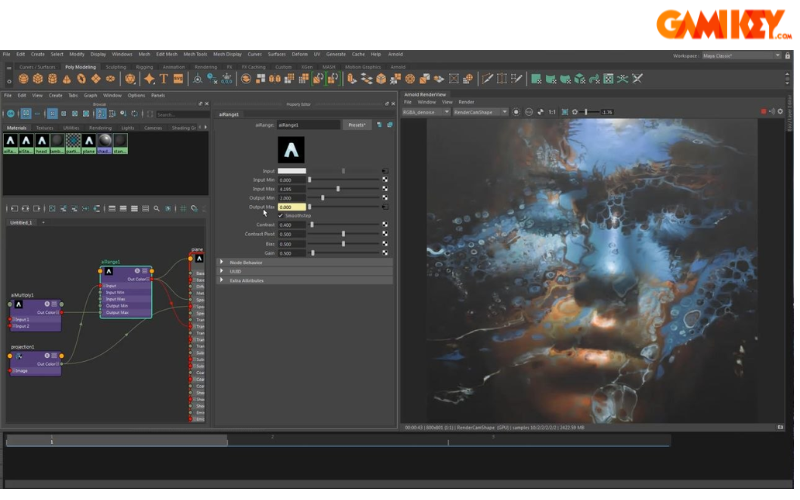
Autodesk Maya is a professional-grade 3D computer graphics and animation software developed and maintained by Autodesk Inc. It provides an integrated environment for modeling, rigging, animation, simulation, rendering, and compositing. First introduced in 1998 by Alias|Wavefront, the software quickly established itself as the industry standard for high-end visual effects and character animation. Autodesk acquired the technology in 2006 and has since continuously enhanced it, releasing regular updates that incorporate cutting-edge tools, improved performance, and support for emerging technologies such as real-time rendering and virtual production.
The software’s robustness and flexibility have made it the preferred choice for major studios worldwide. Its node-based architecture and scripting capabilities allow for extensive customization, enabling artists to build complex pipelines tailored to specific production needs. Whether working on blockbuster films, AAA video games, architectural visualizations, or innovative virtual reality experiences, Autodesk Maya delivers the precision and creative control required to achieve photorealistic results.
Key Features That Define Autodesk Maya
Autodesk Maya distinguishes itself through a rich set of advanced tools designed to handle every stage of the 3D production pipeline. These features enable artists to produce work of exceptional quality while maintaining efficiency in demanding professional environments.
Comprehensive 3D Modeling Tools
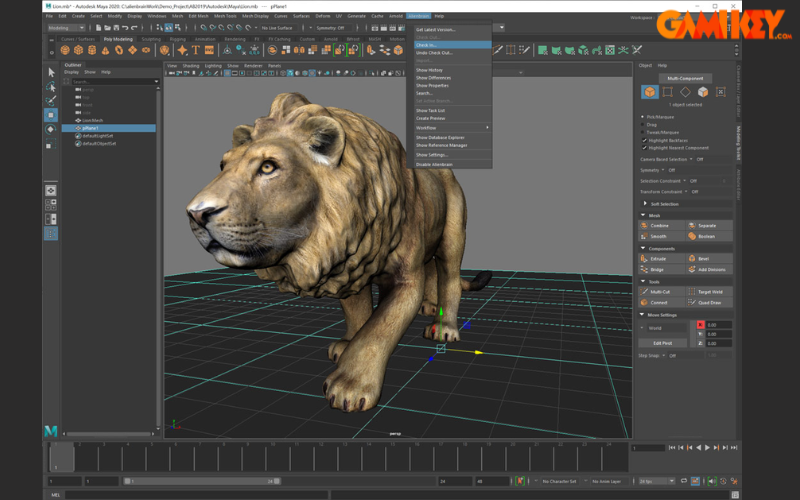
The modeling suite in Autodesk Maya is extraordinarily versatile, supporting multiple paradigms including polygonal modeling, NURBS (Non-Uniform Rational B-Splines), and subdivision surfaces. Artists can seamlessly switch between these methods to achieve the desired topology and surface quality. Advanced sculpting brushes, retopology tools, and precise UV layout utilities ensure that models are not only visually appealing but also optimized for animation and rendering. The interactive grooming tools for hair and fur further enhance realism when creating organic characters.
Sophisticated Animation Workflow
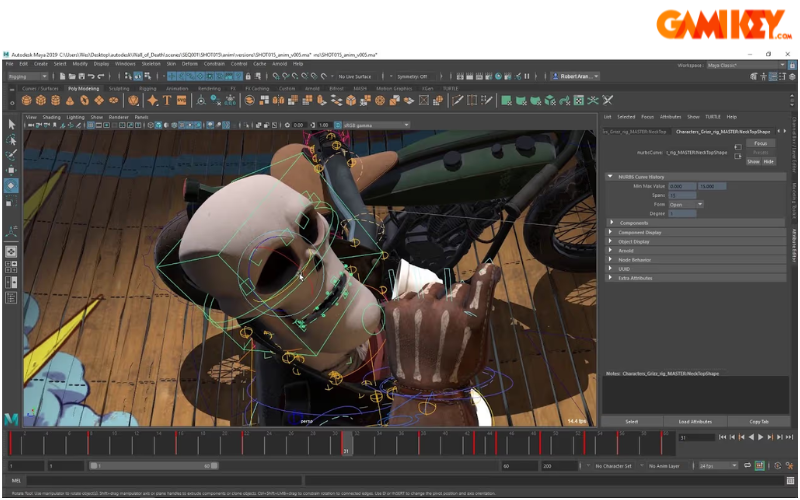
Animation in Autodesk Maya is powered by an industry-leading toolset that includes the Graph Editor, Dope Sheet, Time Editor, and layered animation systems. These allow for non-linear editing, precise control over timing and easing, and the ability to blend multiple animation clips effortlessly. Motion capture integration, character rigging with HumanIK, and deformable skinning ensure that character performances feel natural and expressive. The Motion Trails and Grease Pencil features provide intuitive visual feedback during the animation process.
Powerful Dynamics and Simulation Systems
Maya’s simulation engines are among the most respected in the industry. Bifrost, a procedural visual programming environment, enables the creation of complex effects such as fluids, smoke, fire, sand, snow, and cloth simulations with unprecedented control and realism. nCloth, nHair, and nParticles provide additional specialized solvers for soft bodies, hair dynamics, and particle-based phenomena. These tools integrate seamlessly, allowing effects artists to combine multiple simulations in a single scene while maintaining performance.
Advanced Rendering and Look Development
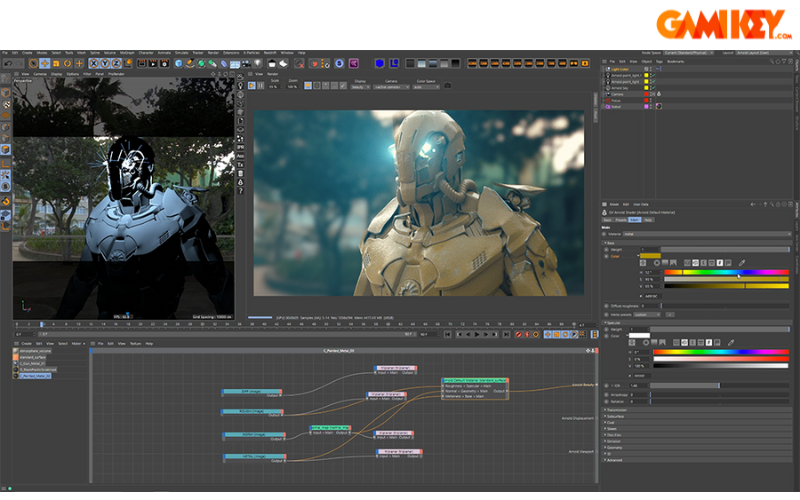
Integrated Arnold renderer delivers production-quality, physically-based rendering directly within the viewport, supporting GPU acceleration for faster iteration. The Hypershade material editor and extensive shader library facilitate sophisticated look development, including layered materials, subsurface scattering, and volumetric effects. Render Setup and AOV (Arbitrary Output Variables) management streamline the process of generating multiple render passes for compositing, while USD (Universal Scene Description) support ensures interoperability with modern pipelines.
Customizable Interface and Pipeline Integration
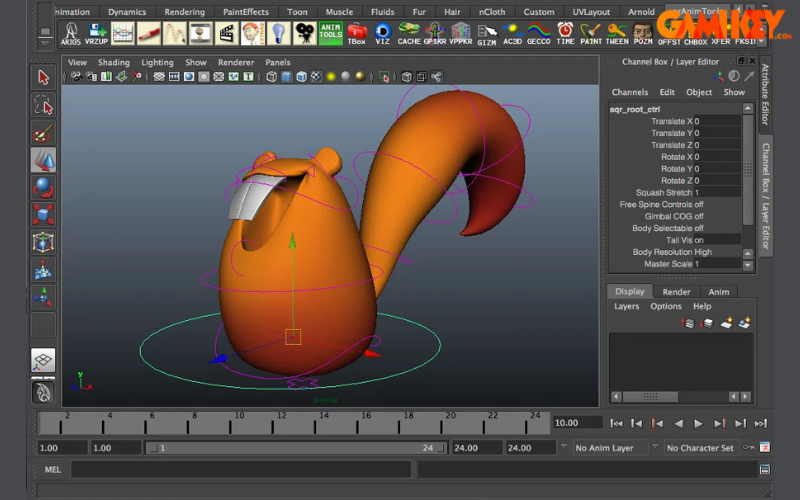
The user interface of Autodesk Maya is highly customizable, supporting Python and MEL (Maya Embedded Language) scripting for automation and tool development. Artists can create custom shelves, marking menus, and plugins to streamline repetitive tasks. Extensive API access enables deep integration with external tools and studio pipelines, making Maya adaptable to virtually any production workflow.
Cross-Platform Compatibility
Autodesk Maya runs natively on Windows, macOS, and Linux, ensuring that teams can collaborate across different operating systems without compatibility issues. Certified hardware support and regular driver optimizations guarantee stable performance on professional workstations.
Real-World Applications of Autodesk Maya
The versatility of Autodesk Maya extends across numerous creative and technical disciplines, where its advanced features enable groundbreaking work.
Film and Television Production
In Hollywood and global film studios, Autodesk Maya is the backbone of visual effects and character animation for many award-winning productions. Its ability to handle massive scenes with thousands of assets, combined with robust simulation tools, makes it ideal for creating epic destruction sequences, fantastical creatures, and emotionally compelling digital characters. Films such as Avatar, The Lord of the Rings trilogy, and countless Marvel Cinematic Universe entries relied heavily on Maya for their groundbreaking visuals.
Video Game Development
Leading game studios use Autodesk Maya for character creation, environment modeling, and cinematic sequences. Its rigging and animation tools excel at producing high-fidelity assets that perform well in real-time engines like Unreal and Unity. The software’s support for FBX export and Alembic caching ensures smooth data transfer throughout the game production pipeline.
Product Design and Visualization
Industrial designers leverage Maya to prototype and visualize products with photorealistic accuracy before physical manufacturing begins. The precise modeling tools and advanced rendering capabilities allow for detailed material studies, lighting simulations, and interactive presentations that help stakeholders make informed decisions early in the design process.
Architectural Visualization
Architects and visualization specialists employ Autodesk Maya to create immersive walkthroughs and still renders of proposed buildings and interiors. Integration with BIM data, atmospheric effects, and high-quality lighting tools enable the production of compelling presentations that convey spatial relationships and material finishes with remarkable realism.
Virtual and Augmented Reality Experiences
As immersive technologies continue to evolve, Autodesk Maya plays a crucial role in developing content for VR and AR platforms. Its real-time viewport capabilities, combined with USD workflows and interactive simulation tools, facilitate the creation of responsive, high-performance 3D environments that deliver convincing virtual experiences.
In summary, Autodesk Maya remains a cornerstone of modern 3D production due to its depth, reliability, and continuous innovation. Its comprehensive toolset and adaptability across industries ensure that it will continue to empower creative professionals for years to come.